Having to go to the hospital is a stressful experience. But while it’s a great relief when the doctor discharges you, it’s important to have a plan in place that ensures you have safe transportation from hospital to home.
Medical professionals put a great deal of importance on this step of the process. They create individualized plans to maximize a patient’s chances of improving their health once they return home. When planning hospital discharge transportation, there are some important factors to keep in mind.
Before you leave the hospital, medical staff develop a plan to make the transition from the hospital to home as smooth as possible. They evaluate a patient’s condition, refer the patient to needed healthcare and make arrangements for follow-up appointments.
About 18 percent of all Medicare patients end up returning to the hospital in 30 days. A good place to start in avoiding that outcome is arranging transportation home that will provide the care you need in transit. That applies whether you are getting driven home or must fly home from your current location.
Medical professionals give so much attention to a patient’s transition out of a hospital because data has shown this is a crucial time that will impact how well a patient recovers after receiving treatment.
Everyone – the patient, their caregivers and medical staff – focus on medical treatment when a person arrives at a hospital. It’s often only at the last minute that caregivers and the patient think about transportation from hospital to home. However, it’s important to give the issue thorough consideration.
Family Caregiver Alliance writes that how transportation from hospital to home is handled “is critical to the health and well-being of your loved one. Studies have found that improvements in hospital discharge planning can dramatically improve the outcome for patients as they move to the next level of care.”
This also applies if a patient is traveling from home to another medical care facility, such as a nursing home. Those who have limited physical abilities due to injury, illness or chronic condition also will need transportation to future medical appointments required by doctors.
If you’re discharged from a hospital but remain wheelchair-bound or otherwise physically incapacitated, then it’s important to have transportation arranged from the hospital through a non-emergency transportation (NEMT) company.
Transporting a patient home is a highly choreographed operation involving many parties. NEMT coordinators work with hospital Cases Managers or Social Workers, who interface with Doctors, Physical Therapists, Occupational Therapists, on how to safely transition a patient from the hospital to home. Transitioning to home may also involve coordinating with a patient’s Care Manager who coordinates the needs of the patient once they are home. The goal is to not simply take a patient from one location to another but to make sure that the needs of the patient are met during the transport and that appropriate resources are in place when the patient gets home.
NEMT companies have experience traveling both in ground and air transit with patients who want a medical professional with them. They also frequently manage transportation from hospital to home and will know how to work with hospital medical staff to ensure they meet all of a patient’s needs.
Flying Angels provides its clients with flight nurses and flight coordinators who rank among the best in the non-emergency medical transport (NEMT) industry. They understand how to provide clients with the safety, security and peace of mind of having expert medical care and travel support.
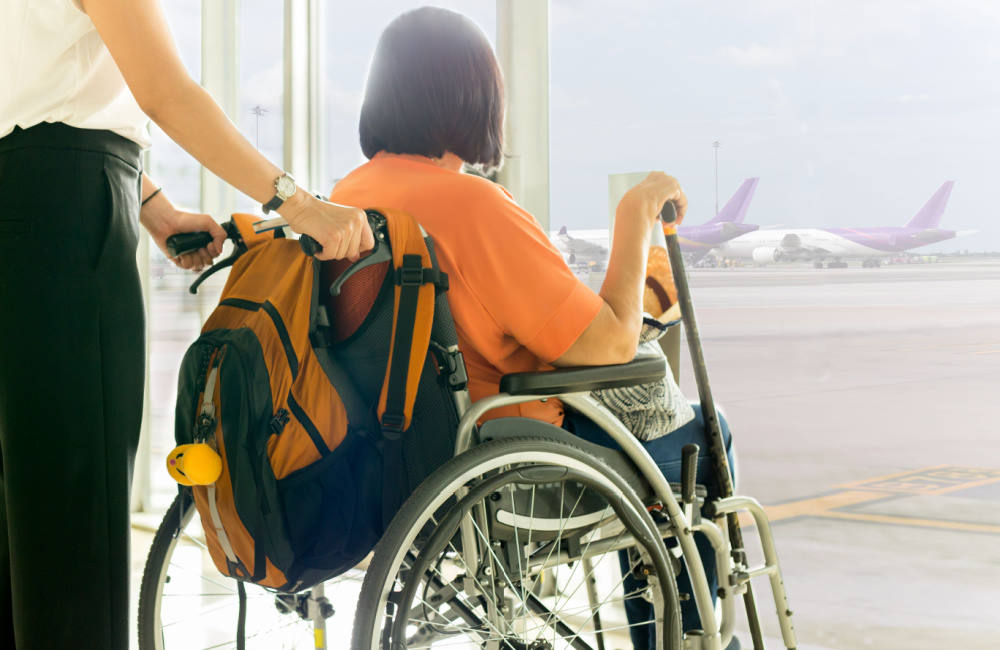
The NEMT services provided by Flying Angels involve flight coordinators who make all the arrangements for the journey and a flight nurse who accompanies clients on the flight. They plan ahead with commercial airlines and airports, making any arrangements needed to clear obstacles patients might encounter during their trip.
People in a wide variety of situations use NEMT services. They include the following.
People who recently suffered an injury and want assistance while flying
Those who have had a medical procedure and require medical support during travel
Those with a chronic condition or illness that makes traveling alone difficult
Families who want a nurse to travel with older family members when they relocate to a new home
A flight nurse provides care during the journey and offers clients and their families the security of having a trained nurse as a flight companion.
Examples of Flying Angels in Action
The following offers a synopsis of several success stories involving Flying Angels providing NEMT services. You can read more details about each case on this page of case examples.
Caitlin and Emma
Caitlin had been assisting her mother, Emma, in relocating from her condo in a Florida retirement community to an assisted living facility near Ithaca, New York. The move brought Emma, 82, closer to her daughter and grandchildren. Emma manages well on her own, although with diabetes and some mild dementia she now can no longer live alone.
While Caitlin managed all the logistical aspects of the move, she recognized the need for assistance during the flight with Emma. That’s when she reached out to Flying Angels. The flight coordinator took charge of all the arrangements, from booking the flights to finalizing the plans. A flight nurse accompanied Caitlin and Emma on their trip on a commercial airline.
The flight nurse meticulously tracked Emma’s insulin supply, which she required every four hours, and kept a close watch on her blood sugar levels. Emma eventually slept during the flight, which landed only a few minutes behind schedule. At the airport, Caitlin’s husband and Emma’s twin grandchildren greeted them. Caitlin took comfort that experts at Flying Angels handled the flight, giving her one less thing to worry about.
Rose
After a tragic car accident, Rose lost the ability to move, becoming a quadriplegic before she ever learned to drive. However, with the support of Flying Angels, Rose can fly. She recently flew from a hospital in Kansas to a rehabilitation hospital in Colorado. Her caseworker called in Flying Angels to take care of the trip, taking the burden off of Rose’s parents.
Kim, the flight nurse, traveled with Rose, starting with picking her up in a wheelchair van, transporting her to the airport, and working with airline staff to get Rose comfortably on the plane. Kim monitored Rose’s vital signs throughout the journey and moved her every quarter of an hour. She also fed Rose her meals and ensured she drank enough fluids. She arrived safely, and her parents hope the rehabilitation therapy will improve her life.
Carl
Carl required Flying Angels’ services after he suffered a heart attack while biking through the Pyrenees in Spain with a group of college friends. His friends got him to a cafe where they could call an ambulance. Eventually, his doctor back in the United States recommended a clinic in Cleveland for him to go to for rehabilitation. The clinic recommended he get transported by Flying Angels.
As with every case, the flight coordinator took over, managing all the arrangements to get Carl back to the U.S. from Spain. Flight coordinators are also experienced in handling last-minute complications. In the case of Carl, it required getting a new connecting flight after the first flight was diverted due to lightning. Flying Angels got Carl to Cleveland a little late, but well in time to start the road toward recovery.
These success stories, just three of thousands, provide examples of how Flying Angels helps its clients every day. They provide world-class NEMT services that provide people with the medical care and travel support they need to ensure a worry-free medical transport experience.
For patients, traveling with a flight nurse who works with a non-emergency transport company can make their journey much less stressful. However, it also offers huge benefits for families, taking the stress of travel arrangements off their hands and giving them the peace of mind in knowing their loved ones are not traveling alone.
NEMT supports families by taking on many of the tasks that can make medical transport stressful, whether it’s a trip home after a hospital discharge or a long-distance journey that requires the presence of a flight nurse.
Navigating healthcare is a complex and challenging task even when in perfect health. It’s even more difficult for the elderly, the injured or those with chronic conditions that impede mobility. For both patients and their families, NEMT provides a consistent, reliable service.
Ways NEMT Supports Families, Patients
NEMT has emerged as a lifeline for patients facing mobility challenges and their families. The medical transport services offered by NEMT companies make a significant impact on the lives of families, offering them the support and assurance they need.
Reliability and Accessibility
One of the primary advantages of NEMT is its reliability. Traditional transportation options can be unreliable, causing stress and anxiety for both caregivers and patients. NEMT services are specifically designed to cater to individuals who face challenges when traveling alone, providing experienced nurses who accompany clients on their journey. This reliability gives families peace of mind, knowing that their loved ones will reach their destinations safely.
Specialized Care and Assistance
NEMT supports families and patients in areas beyond just transportation. They often offer specialized care and assistance tailored to the unique needs of their passengers. Trained flight nurses understand the challenges that individuals with disabilities or elderly family members may face during transit. They are equipped to provide necessary support, such as helping with navigating the airport, working with airlines and airports to make any special arrangements, and helping passengers board and find the best possible seat on the plane. These services provide clients comfort and security during the journey, greatly reducing the stress for both clients and their families.
Cost-Efficiency
Traditional transportation options, especially in cases of medical emergencies, can be financially burdensome. NEMT services offer a cost-effective solution, eliminating the need for expensive ambulance services for non-emergency situations.
Ground Transportation
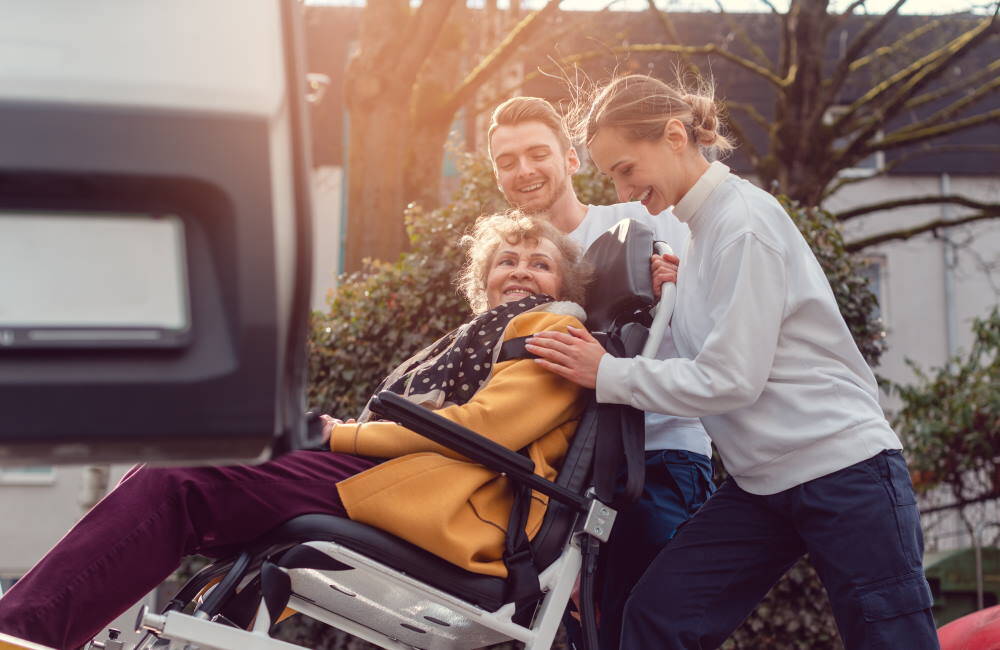
NEMT services also include ground transportation to and from the airport. In the case of Flying Angels, a wheelchair van is used to transport patients, or a professional car service for those with minimal mobility issues. In most cases, RNs transport patients in customized reclining wheelchairs, which allow RNs to transfer patients from their bedside to the reclining wheelchair, then load them directly into a wheelchair van and to the airport. At the airport they ride through until they get to the aircraft where they are transferred to a first-class seat, often using a customized transfer slings. The use of these reclining wheelchairs is one of the services that sets Flying Angels apart from other NEMT companies.
Flexibility in Scheduling
NEMT services are designed to accommodate the unique scheduling needs of families. For those traveling long-distance, even to international locations, NEMT professionals can book all the arrangements in addition to providing support and care during the journey.
NEMT has emerged as a crucial support system for families facing the challenges of providing care to individuals with special needs or elderly relatives. By easing the burden of transportation logistics, NEMT empowers families to focus on what truly matters – the health and well-being of their loved ones.
Each client has their own unique needs and challenges when it comes to non-emergency medical transport (NEMT). That’s why the highest quality companies offer personalized medical transport that meets their clients’ needs and provides them with a safe, comfortable journey.
NEMT services continue to grow in popularity because, for many people, traveling without support on a commercial airline, or to and from a medical appointment, is a daunting task. For those with injuries or conditions that impede mobility, it is an almost impossible task to fly alone. NEMT services take the worry out of medical transport, allowing people to have the peace of mind that they will receive support throughout their journey.
People should expect a high-level of service and expert medical attention when using personalized medical transport. NEMT operates on the concept that healthcare doesn’t just happen within the confines of a hospital or clinic. It extends to the journey to get there and back again.
NEMT companies should also acknowledge that one size does not fit all, and that individuals have different requirements when it comes to transportation.
The service starts with an RN flight coordinator. These licensed, experienced nurses consult with clients to determine their individual needs. This includes any injuries and chronic conditions they have, as well as any special medical equipment or medication they use.
RN flight coordinators keep this information in mind as they make all the arrangements for the client’s journey, booking the flights and contacting airport and airline personnel ahead of time to make any needed arrangements.
All this happens before the journey begins. During the trip, an experienced flight nurse accompanies the client. They oversee medical equipment, track medication use and work with airlines and the flight crew for any needed accommodations. They also have the skills and experience to provide any medical attention needed and are specially trained to work at high altitudes.
Making Hospitals Discharges Less Stressful
Many people associated NEMT with transport on commercial airlines. However, some NEMT companies offer a range of services related to medical transportation. For example, they can arrange transportation for a hospital discharge, making it part of the discharge plans created while patients are in the hospital.
Patients also travel from the hospital to their destination with an experienced nurse. They get quality medical care after their discharge, a less stressful experience leaving the hospital and the peace of mind that comes with having an experienced clinical healthcare professional with them on every step of the journey.
Compassionate, Flexible Support For Your Journey
Another important aspect of personalized medical transport is the compassion and care that RN flight coordinators and flight nurses bring to their job. They receive specialized training in assisting individuals with varying needs, ensuring that clients feel comfortable and supported throughout their journey.
NEMT companies also recognize that a certain amount of flexibility is needed to make the journey go as easy as possible. Personalized medical services understand the importance of punctuality and flexibility. However, they also recognize that things can occur during a trip to throw things off schedule, which is why they always come prepared for any challenges.
NEMT services also leverage technology to facilitate communication between clients and service providers, allowing for seamless updates and adjustments to travel plans. This level of convenience ensures that clients can focus on their health, rather than worrying about logistics.
As healthcare evolves, so must the services that support it. Personalized NEMT represents a significant leap forward in ensuring that every individual, regardless of their unique needs, has access to quality care.
By recognizing that transportation is an integral part of healthcare, and tailoring services accordingly, personalized NEMT services are revolutionizing the way people approach medical accessibility. They’re not just getting clients from one place to another; they’re providing a vital lifeline for those in need. In doing so, they’re nurturing a culture of empathy and inclusivity in healthcare.
In recent years, the landscape of medical travel has undergone a significant transformation, with a growing emphasis on providing comfortable medical travel solutions for patients who want to travel with experienced medical professionals when flying on commercial airlines.
Flying Angels specializes in providing medical travel solutions in the non-emergency medical transport (NEMT) field. NEMT involves having a flight nurse travel on a commercial flight with those who have injuries, chronic conditions or medical disorders that impede their mobility and ability to travel alone. The list of Flying Angels services range from senior relocations and hospital discharges to long-distance medical transportation and providing travel companions.
As more people explore healthcare options, the concept of comfortable medical travel solutions has gained prominence, offering not only top-notch medical care but also a seamless and pleasant experience for patients and their families.
The Importance of Medical Travel Solutions
When it comes to NEMT, comfort and well-being are of paramount importance. Whether patients are relocating to a new home or flying for a specialized medical appointment, the journey should be as stress-free and comfortable as possible. Fortunately, NEMT is evolving to prioritize the comfort and needs of patients, offering a new level of convenience and care.
One of the key elements of comfortable NEMT solutions is personalized assistance. Trained flight nurses who understand the unique needs of patients provide support throughout the journey. Whether it’s helping people navigate airport security, the onboarding process or finding the best seats on the plane, flight nurses ensure that the experience runs as smoothly as possible.
An RN flight coordinator books all the flights for clients, working in advance with airports and airlines to ensure that they provide the services needed. They oversee all arrangements, including all reservations, handling all travel-related paperwork, arranging for special accommodations, anticipating any challenges for the trip and managing them efficiently, and quickly addressing any travel delays, flight changes and cancellations.
Taking a Patient-Centered Approach
As an NEMT company, Flying Angels provides comfortable medical travel solutions by prioritizing a patient-centered approach. This means understanding the unique preferences and needs of each patient and tailoring the flight experience accordingly.
Travel can be stressful, especially for individuals with chronic illnesses or complex medical needs. Patients can rest assured that they will arrive at their destination safely and on time, allowing them to focus on their health and well-being.
Flying Angels also recognizes the importance of maintaining patients’ dignity and independence. By offering assistance that is respectful and considerate, these solutions empower patients to retain a sense of control over their transportation experience. This can have a positive impact on their overall emotional well-being.
The evolution of NEMT solutions reflects a commitment to enhancing the patient experience from start to finish. The emphasis on comfort, personalized assistance, accessibility and patient-centered care redefines how individuals access medical care. As the industry continues to innovate, patients can look forward to a journey that prioritizes their comfort, well-being and overall peace of mind.