
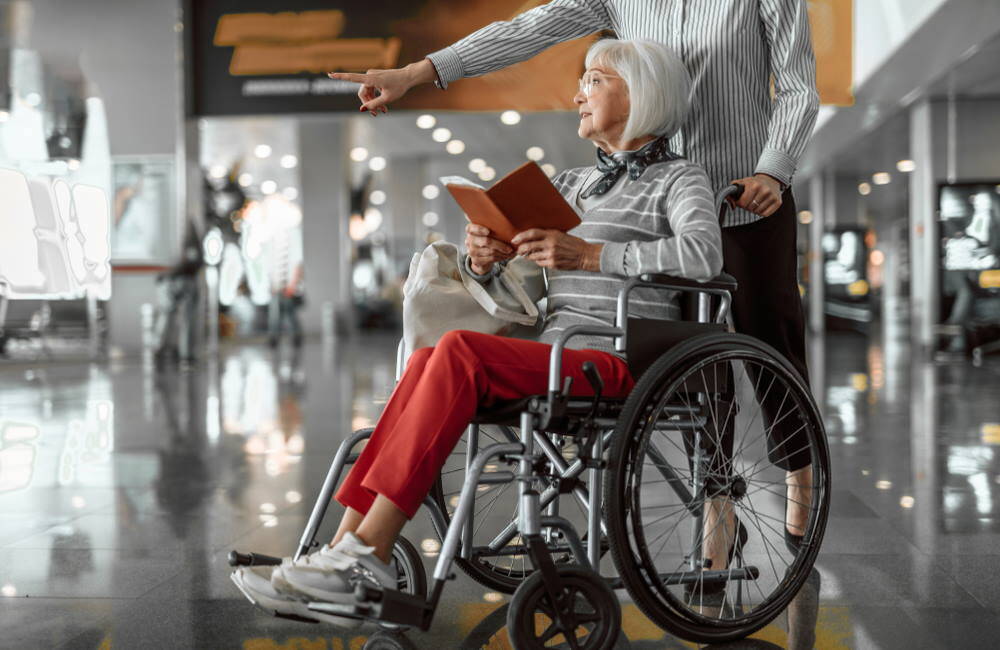
Under provisions of the federal Air Carrier Access Act, airlines must offer air travel assistance for seniors that includes assistance in boarding, deplaning and making connections to their next flight. It also includes some assistance during the flight, but for personal services, seniors need someone along with them on the flight such as family or a flight nurse.
Flight assistance for the elderly helps make air travel safe for seniors. While it takes a flight nurse to handle personal issues such as medication during a flight, air travel assistance for seniors offered by airlines and airports makes it much more comfortable for seniors to travel.
Can I Hire a Nurse to Fly With Me?
Examples of Travel Assistance for Seniors
Airlines and airports offer many forms of travel assistance that make air travel for seniors much easier to manage. They include:
Wheelchairs. Those with difficulty walking long distances require a wheelchair to navigate large airport terminals. As part of flight assistance for the elderly, airports offer wheelchair service from drop off to the gate.
Special screening procedures. If you are older than 75, the federal Transportation Safety Agency will make special accommodations for you when it comes to going through security. However, you may experience some delay if you have a wearable medical device or medical equipment, which must get checked separately.
Best seats. Seniors usually like to sit near the front of an airplane, where it’s easier to access the bathroom. That also shortens the trip while boarding and deplaning. Many may want seats with extra legroom, as well as the chance for early boarding that allows them to get settled on the plane before everyone else starts boarding. While it’s not always possible to get these seats, always ask when buying tickets.
Food service. If it’s a long flight, airlines may offer specialty meals that meet dietary restrictions for senior passengers.
Senior discounts. This is another issue to ask about, although senior discounts are harder to find these days.
In order to request special assistance such as a wheelchair, call the airport at least 48 hours before your flight. Most airports have staff dedicated to providing travel assistance to seniors. They will mark your itinerary with “special assistance requested,” allowing staff to prepare for your arrival.

Personal Flight Assistance For the Elderly
While all these services offer advantages, there are some things that airports and airlines will not do. The biggest issue is with extensive personal assistance during the flight itself. While staff will give senior travelers as much assistance as they can, they are not required to focus only on an elderly passenger and must meet the needs of a plane full of people.
This extends to such issues as managing your medication during the trip and handling any in-flight medical needs.
The solution is to have a family member or close friend fly with you. If that’s not possible, a flight nurse working with a medical transport service that specializes in traveling with elderly passengers can help. They will manage medications and handle any medical issues that might arise during the trip. A Flight Coordinator handles booking travel and making all the arrangements for the trip including at the airport for flight assistance for the elderly. By offering travel assistance for seniors, airlines and airports make it much easier for the elderly to travel safely and in as much comfort as possible. The key is to contact both the airport and airline in advance to secure the special assistance you need.